

Metal Casting
Large Size, Complex Shapes, Mass Production
Why Metal Casting?

High Possibility
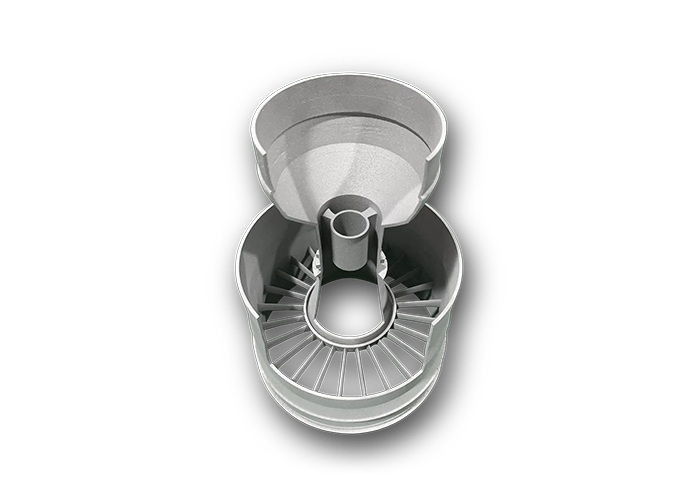
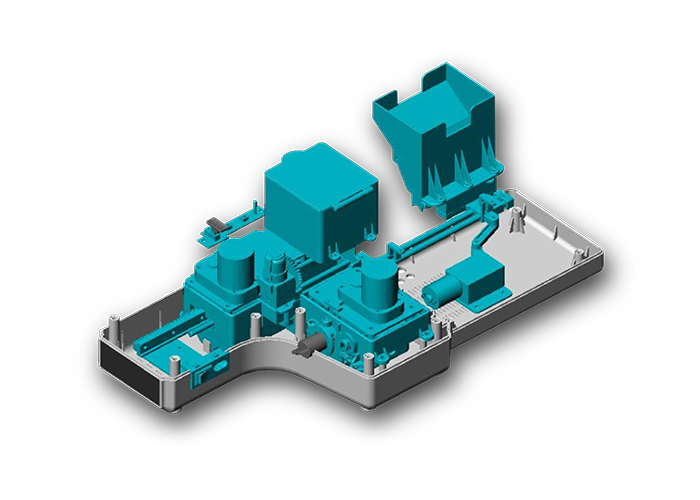
The size, thickness, and shape of castings are essentially unrestricted in the metal casting process; casting wall thicknesses range from 0.3 to 1000 mm, lengths range from a few millimeters to ten meters, and quality ranges from a few grams to more than 300t. For the production of parts with complex shapes, especially those with complex cavities, such as complex boxes, valves, impellers, engine cylinders, propellers, etc., the metal casting process is best.

Wide Range Of Materials Choices
There are numerous materials available for metal castings. For casting, almost any material can be melted into a liquid alloy, including steel, various aluminum alloys, copper alloys, iron alloys, castings made from platinum alloys, and so on. Casting is the only practical forming method for brittle alloy materials with low plasticity, such as regular cast iron. Cast iron is the most commonly used material in industrial production, accounting for more than 70% of total output.

Least Cost Process For Mass Production
Casting performs more economically overall and uses less energy and materials than other metal forming techniques. Its low cost can be attributed to three factors. To begin with, the production processes are adaptable; mass production can be set up as mechanized production. Second, recyclable materials, waste, and old metal can all be used. Last but not least, casting has a certain degree of dimensional accuracy, the allowance is small, and it conserves metal materials and processing time.

Free Consultation and Instant Quote
Send us your CAD file or 2D draft, with product requirements to get an instant quote.

Quick Production
With our GBA approved manufacturers, you can receive parts in as less as 3 days in Eastern South region.

Service with No Worries
We will keep reporting to you the production and shipping status once we get started.

Process of Metal Casting
Examine The Raw Material
As a metal casting facility, we are accountable for quality, starting with the raw materials used. That is why we always examine the raw material at the beginning to make sure that adheres to our strict standards for quality.
Create The Mold And Coremaking
The molten metal must first be contained and shaped in a mold cavity in order to successfully produce a casting. In many instances, we also need to create a core that will fit inside the mold and leave hollow spaces inside the finished part. Molds and cores may be single-use for greensand casting or shell mold casting, or they may be reusable for die casting or permanent molding.
Melting And Pouring
Our melting process by heating the alloy over a burner or open flame and placing it in a receptacle with a higher melting point. We must pour the molten metal into the mold cavity after melting the alloy. The pouring process is supported by a ladle system, which enables operators to manually or automatically control pouring speed. When pouring is done incorrectly, gases can get trapped inside the mold and cause holes to form in the finished casting.

Solidify
Once more, manufacturers must take into account the molten metal’s shrinkage during cooling and the release of gases that accumulate inside the mold during pouring. To guarantee that they satisfy the required hardness, castings go through a variety of heating and cooling procedures, mechanical and metallographic requirements.
Cleaning, Heat Treatment And Inspection
The majority of cast parts need to be finished with processes like cleaning (the removal of extra material from the part), gate removal (the removal of the pouring channels from the part), heat treatment (the heating and cooling of the castings in a controlled environment to improve physical properties), and inspection for the castings’ specs and quality control.
Additional Machining And Surface Finishes
Castings can be processed using CNC machining centers and other equipment, to fulfil the requirements of the product. To improve the corrosion protection and aesthetic appeal of castings, the surface might need to be given various treatments like phosphate treatment and spray painting.
 Current Projects
We cover a wide range of major metals for casting with applications in multiple industries. This enables customers to achieve both unique prototypes and tailor-made end-use components.
Zinc Casting

metal cating
artistic curve

metal casting
complex shape

metal casting
miniature
Stainless Steel Casting

metal casting
small parts

metal casting
installation art

cnc machining
industrial parts

metal casting
mass production

metal casting
fabric shape
Copper Alloy Casting

metal casting
abstract sculpture

metal casting
industrial parts

metal casting
ancient copper

metal casting
abstract sculpture

Aluminum
✔ Low weight
✔ Fast Building
✔ High strength and hardness

Stainless Steel
✔ Can apply to Food Processing
✔ Easily machined into diverse shapes
✔ Excellent strength, corrosion resistant

Copper Alloy
✔ Strong alloy with corrosion resistance
✔ Unlike iron, neither brass nor bronze rusts
✔ Jewelry size to large sculptures

Titanium Alloy
✔ Lightweight & Bio-compatible
✔ Sports, Medical & Aerospace use
✔ Excellent resistance to cavitation

Maraging Steel
✔ Ideal Tool Steel for mold designs
✔ Easily fabricated into gears & mandrels
✔ High ductility, strength & wear resistance

Electroplating
✔ Aesthetic improvement
✔ Temperature resistance
✔ Increase corrosion resistance

Painting
✔ Aesthetic improvement
✔ Increase corrosion resistance
✔ Increase abrasion resistance

Anodizing
✔ Aesthetic improvement
✔ Increase corrosion resistance
✔ Increase wear resistance

Sandblasting
✔ Remove old paint

Polishing
✔ Increase corrosion resistance
✔ Increase chemical resistance

Brushing
✔ Deburring
✔ Edge rounding
To know more, contact us for a free consultation and instant quote.