
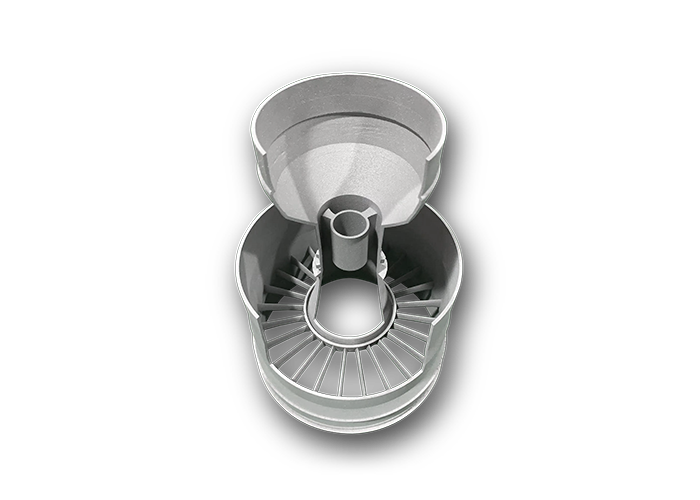

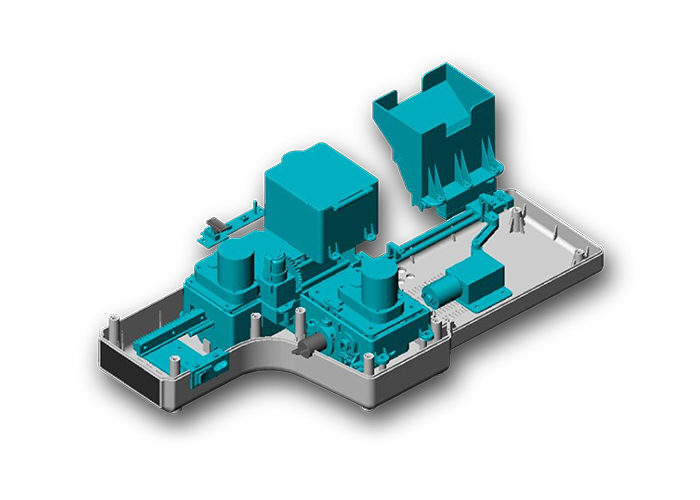
“3D printing, also known as additive manufacturing, has been making significant strides in the aerospace industry. With its ability to quickly and efficiently produce complex parts, 3D printing offers a range of advancements and future prospects in aerospace. In this article, we will explore the benefits and applications of 3D printing in aerospace.”
Advancements of 3D Printing in Aerospace
Design Flexibility
One of the main benefits of 3D printing in aerospace is its design flexibility. With 3D printing, complex geometries and intricate details can be produced with ease, allowing for more efficient and innovative designs. This design flexibility can lead to lighter and more aerodynamic structures, which can result in improved performance and fuel efficiency.
Cost Savings
3D printing can also offer significant cost savings in aerospace. Traditional manufacturing processes can be time-consuming and expensive, requiring significant amounts of resources and manpower. With 3D printing, parts can be produced quickly and with less waste, leading to cost savings in production and maintenance.
Improved Safety
3D printing can also lead to improved safety in aerospace. With its ability to produce complex and customized parts, 3D printing can enable the production of safety-critical components that are tailored to specific needs. This can lead to improved reliability and safety in aerospace.
Future Prospects of 3D Printing in Aerospace
Space Exploration
3D printing offers a range of future prospects in space exploration. With the ability to produce structures and components in space, 3D printing can enable long-term space missions and reduce the need for resupply missions. Additionally, 3D printing can be used to produce structures and habitats on extraterrestrial bodies, such as the Moon or Mars, which could be used for future exploration and colonization.
Sustainability
3D printing can also offer future prospects for sustainability in aerospace. By producing parts with less waste and using sustainable materials, 3D printing can help reduce the environmental impact of aerospace. Additionally, 3D printing can be used to produce structures that are energy-efficient, further reducing their impact on the environment.
Repair and Maintenance
3D printing can also offer future prospects for repair and maintenance in aerospace. With the ability to produce customized parts on demand, 3D printing can enable faster and more efficient repairs, reducing downtime for aircraft and spacecraft. Additionally, 3D printing can be used to produce replacement parts for older aircraft and spacecraft, which may be difficult or impossible to obtain through traditional manufacturing processes.
Conclusion
Overall, 3D printing technology has the potential to revolutionize the aerospace industry, offering a range of benefits and future prospects in this field. With its design flexibility, cost savings, and improved safety, 3D printing can enable more efficient and innovative aerospace designs. Through space exploration, sustainability, and repair and maintenance, 3D printing offers new possibilities for the future of aerospace. As 3D printing technology continues to advance, it is likely that it will become an even more important tool in aerospace, leading to more efficient and sustainable aircraft and spacecraft designs that will help to shape the future of space exploration and travel.
#3Dprinting #additivemanufacturing #aerospace #spaceexploration #designflexibility #costsavings #improvedsafety #sustainability #repairandmaintenance #innovation #futureprospects #aerodynamicstructures #fuel efficiency #longtermspacemissions #extraterrestrialhabitat #energyefficiency #environmentalimpact #spacecraftdesign #aircraftdesign #manufacturingprocess #manufacturingtechnology #futureofaerospace