
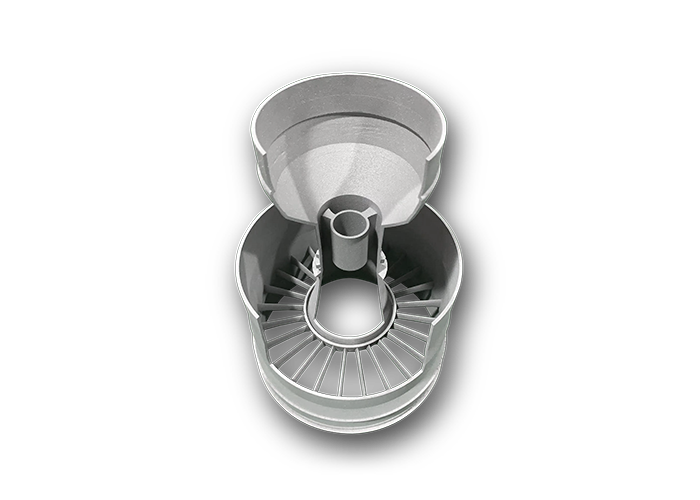

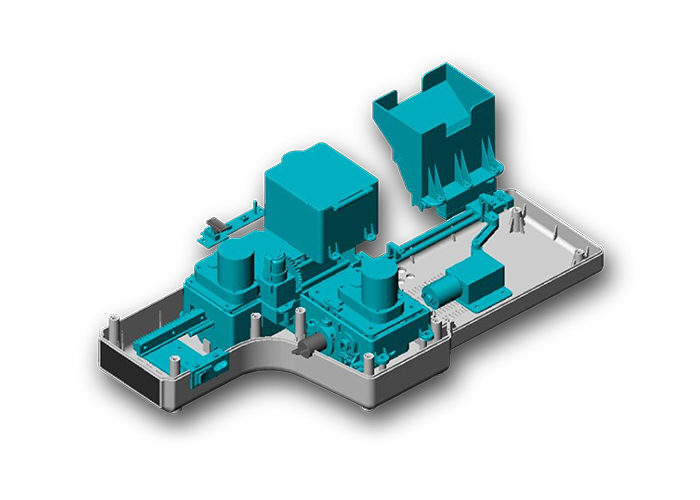
“3D printing technology has been gaining popularity in recent years, as it offers many advantages over traditional manufacturing methods. However, as with any new technology, there are also economic considerations that need to be taken into account. In this article, we will explore the economics of 3D printing, including the cost-benefit analysis of using 3D printing, and the market trends driving its adoption.”
The Cost-Benefit Analysis of 3D Printing
One of the biggest advantages of 3D printing is its ability to reduce production costs. With traditional manufacturing methods, there are often high setup and tooling costs, which can be a significant barrier to entry for small businesses and startups. 3D printing, on the other hand, allows for on-demand production, which reduces the need for large inventories and lowers the cost of production.
Another benefit of 3D printing is its ability to reduce waste. Traditional manufacturing methods often result in large amounts of waste, as it can be challenging to produce precise amounts of materials. With 3D printing, materials are added layer by layer, reducing the amount of waste generated during production.
However, it is important to note that while 3D printing can offer cost savings in some areas, it may not always be the most cost-effective option. For example, for high-volume production, traditional manufacturing methods may still be more cost-effective than 3D printing.
MarketTrends Driving the Adoption of 3D Printing
The adoption of 3D printing has been driven by several market trends. One such trend is the increasing demand for customization. With 3D printing, it is possible to create highly customized products at a lower cost than traditional manufacturing methods. This has led to the growth of niche markets and the ability for businesses to create unique products tailored to individual customer needs.
Another trend driving the adoption of 3D printing is the shift towards sustainable manufacturing practices. 3D printing allows for the production of precise amounts of materials, reducing waste and lowering carbon emissions. Additionally, 3D printing can also reduce transportation costs, as products can be produced closer to the point of consumption.
Furthermore, advancements in 3D printing technology have also driven its adoption. As technology has improved, 3D printers have become more affordable and capable of producing higher-quality products. This has made 3D printing more accessible to a wider range of businesses and individuals.
The Future of 3D Printing Economics
As 3D printing technology continues to evolve, its economic implications are likely to become even more significant. One area where 3D printing is already making an impact is in the field of spare parts manufacturing. With 3D printing, it is possible to produce spare parts on demand, reducing the need for large inventories and lowering costs.
In addition to spare parts manufacturing, 3D printing is also being used in the medical industry to produce customized implants and prosthetics, which can improve patient outcomes and reduce healthcare costs.
Another area where 3D printing may have a significant economic impact is in the field of construction. 3D printing technology can be used to produce complex architectural designs quickly and cost-effectively, reducing the need for large construction crews and heavy machinery.
Conclusion
In conclusion, the economics of 3D printing are complex and multi-faceted. While 3D printing offers many advantages over traditional manufacturing methods, it may not always be the most cost-effective option. The adoption of 3D printing has been driven by market trends such as customization, sustainability, and technological advancements. As the technology continues to evolve, its economic implications are likely to become even more significant, particularly in areas such as spare parts manufacturing, healthcare, and construction.
#3DPrinting #Economics #CostBenefitAnalysis #MarketTrends #Customization #Sustainability #TechnologicalAdvancements #SparePartsManufacturing #Healthcare #Construction #OnDemandProduction #ReducedWaste #LowerProductionCosts